
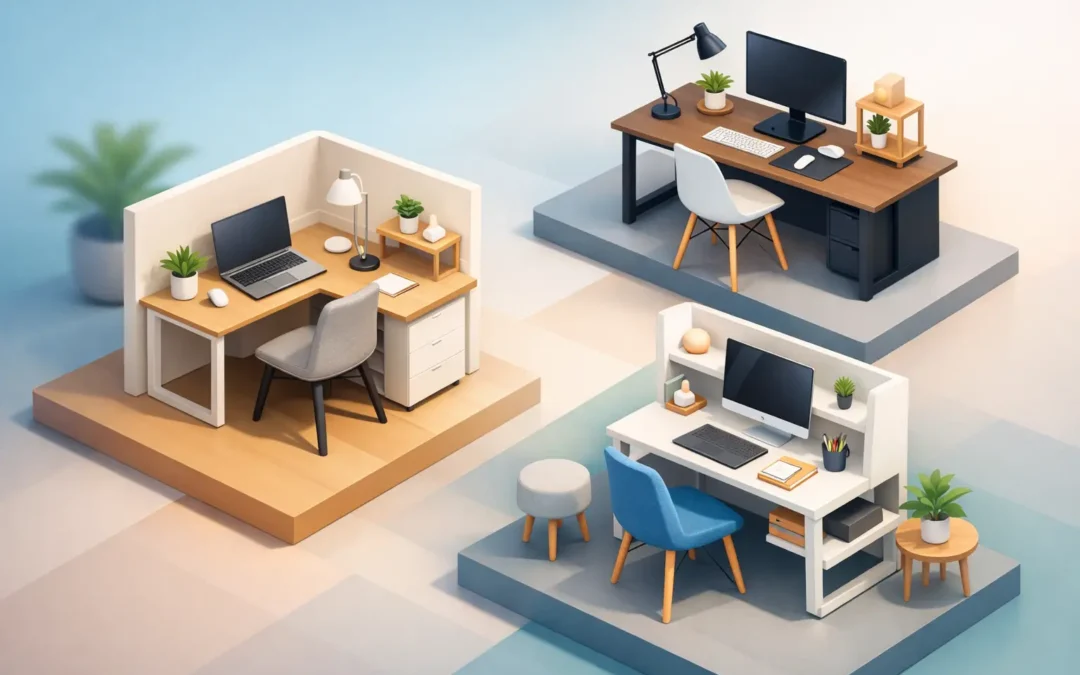
A desk that looks compact in a showroom can feel surprisingly large once a chair, filing cabinet, monitor, cables, and a person trying to move around it are added. The best desks for small offices are not simply the smallest available. They are the desks that give each employee enough working room while keeping walkways clear, storage accessible, and the office comfortable to use all day.
For a small business suite, home office, clinic administration area, school office, or compact commercial unit, every furniture choice has a bigger impact. A well-planned desk layout can make a limited footprint feel organized and professional. A poor choice can create clutter, awkward movement, and a workspace people avoid using.
Start With the Room, Not the Desk
Before choosing a desk style, measure the usable area of the room. This means more than measuring wall to wall. Account for doors that swing open, windows, pillars, electrical outlets, built-in cabinets, and the clearance needed behind each chair.
As a practical guide, allow enough room for a seated employee to push their chair back and stand comfortably. Main walkways should also remain open, especially where staff, visitors, or customers need to pass through. A desk that fits tightly on paper may not work once the room is in daily use.
Think about how the office operates. A finance team may need drawer storage and space for documents. A sales team may need more room for dual monitors and quick collaboration. A reception or service counter needs a clear customer-facing surface as well as private working space behind it. The right solution depends on work habits, not just desk dimensions.
Best Desk Types for Small Offices
There is no single best desk for every small office. The most suitable option depends on the number of users, the level of privacy required, and whether the room needs to support focused work, meetings, or customer interaction.
Straight desks for flexible layouts
A straight desk is often the easiest place to begin. It can sit against a wall, face into the room, or form part of a shared workstation arrangement. Its simple shape makes future reconfiguration easier if your team grows or the office moves.
For one-person offices and home offices, a straight desk with a modesty panel and a mobile pedestal can provide a clean, professional setup without consuming too much floor space. Choose a depth that suits the equipment being used. A shallow desk may save inches, but it can become uncomfortable if staff use large monitors, desktop computers, or paper files throughout the day.
L-shaped desks for corner space
Corners are often underused in compact offices. An L-shaped desk can turn that dead space into a productive work zone, providing a main surface for computer work and a return surface for paperwork, printers, or client documents.
This style is particularly useful for managers, administrators, and staff who regularly switch between computer tasks and physical documents. The trade-off is that L-shaped desks can visually dominate a small room. They work best when the corner is genuinely available and the return does not obstruct a walkway or door.
Bench workstations for small teams
When several employees work in one room, bench-style workstations usually use space more efficiently than separate executive-style desks. Two, four, or more positions can share a structured footprint, often with divider panels, shared cable access, and coordinated storage.
Bench workstations help create a tidy, consistent appearance, particularly in compact sales offices, call areas, project rooms, and administrative departments. However, closely placed desks need thoughtful cable management and a reasonable level of acoustic privacy. If employees spend long hours on calls or handle confidential information, low screens or partitions can make the setup more practical.
Wall-mounted and compact computer desks
For very limited spaces, such as a small consultation room or a dedicated home-office nook, a compact computer desk may be enough. These desks work well for laptop-based tasks, short-term administration, or occasional use.
They are less suitable for roles requiring extensive filing, multiple screens, or frequent face-to-face meetings. Saving floor space is valuable, but a desk should still support the actual workload. A surface that is too narrow often leads to stacked papers, trailing wires, and poor posture.
Choose the Right Size and Shape
Desk size should support the work, not just fit the room. For laptop users, a compact surface can be comfortable if there is separate storage nearby. For desktop users, allow room for a monitor, keyboard, mouse, documents, and some clear writing space. Employees should not have to move equipment every time they need to sign a form or review a file.
Desk depth matters as much as width. A deeper work surface gives better viewing distance from a monitor and leaves space for cables behind it. A slightly narrower desk can work in a tight room, but consider monitor arms or wall-adjacent cable trays to prevent the workstation from feeling crowded.
Shape also affects circulation. Straight desks are generally easier to align in rows or along walls. Corner desks use more surface area in one position. Curved or unusually shaped desks may look distinctive, but they can make space planning harder in compact rooms where every inch needs a purpose.
Storage Should Reduce Clutter, Not Add Bulk
Small offices often become crowded because storage is added only after desks are installed. A mobile pedestal that tucks under the desk can hold personal files and stationery without taking up an extra wall. Low cabinets can divide a room gently while keeping supplies within reach. Taller cabinets save floor space, although they should be positioned carefully so the room does not feel enclosed.
Avoid giving every desk a large fixed pedestal unless employees truly need it. In shared or paper-light offices, centralized storage may be more efficient. A combination of personal drawers, a shared filing cabinet, and designated supply storage often uses less space than repeating the same bulky storage unit at every workstation.
Clear storage rules matter too. When printer paper, toner, files, and everyday supplies have a proper place, desks remain available for work. This is one reason office planning and office consumables should be considered together rather than as separate purchases.
Do Not Overlook Cables, Chairs, and Privacy
A clean desk arrangement can lose its value quickly when power cords run across the floor. Select desks or workstations with cable grommets, trays, or access points where possible. Grouping desks near available power outlets may also reduce the need for extension cords crossing walkways.
The chair needs space as well. A compact desk paired with an oversized chair can make the entire room feel cramped. This does not mean choosing an uncomfortable chair. Look for supportive seating with an appropriate footprint, adjustable height, and arms that can fit under the desk when needed.
Privacy is another frequent consideration. In a small room, employees are naturally closer together. Modest panel dividers can define each workstation without blocking light or making the space feel closed off. For teams that handle customer details, accounts, or sensitive documents, desk orientation can be as important as screens. Position monitors away from visitor sightlines where possible.
Plan for Growth Without Wasting Space Today
Many businesses buy desks for the team they have now, then struggle when one or two employees join later. Modular furniture can offer a better balance. A two-person workstation may be extended, rearranged, or paired with matching pieces as needs change. Straight desks also make it easier to move from individual offices to a shared layout.
That said, planning for growth does not mean leaving half the room empty or buying furniture that is too large for current work. It means selecting sizes, finishes, and desk systems that can be repeated later. A coordinated range makes future additions look intentional rather than improvised.
For project-based office setups, a space plan is especially helpful before any furniture is delivered. It confirms desk locations, circulation, storage placement, and installation requirements in advance. Wawasan Office supports this process with practical consultation, space planning, delivery, and on-site assembly, helping customers avoid the common problem of furniture that arrives but does not work as a complete office.
A Better Small Office Feels Easier to Work In
The best desks for small offices create room for work rather than merely occupying a room. Start with the daily tasks, measure the real usable space, and choose a desk style that supports both people and equipment. When the layout includes sensible storage, cable control, comfortable seating, and room to move, even a compact office can feel calm, capable, and ready for the next working day.