
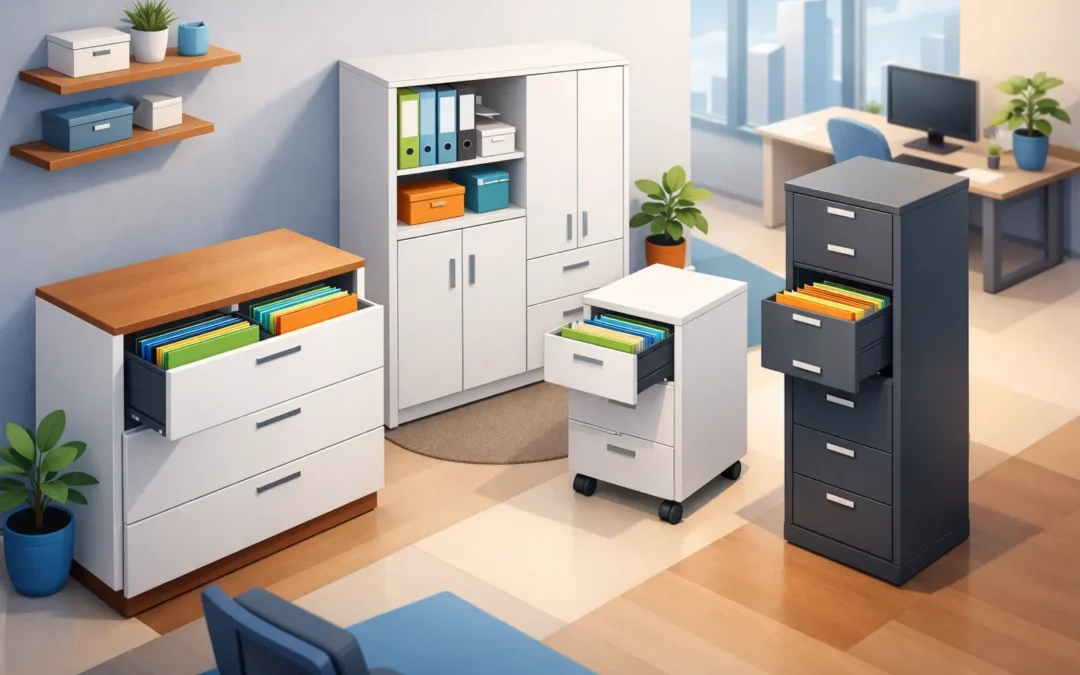
A file cabinet becomes a problem the moment someone has to leave their desk, search through three drawers, and still ask where a document went. The right office storage cabinets for files do more than hold paper. They give teams a clear place for records, protect sensitive information, and keep valuable floor space from being swallowed by clutter.
For a small office, school administration area, clinic, reception desk, or home workspace, the best choice is rarely the biggest cabinet. It is the cabinet that matches the volume of documents, the way people retrieve them, and the room available around it. A practical filing setup can make daily work feel calmer while reducing the time spent looking for what should already be within reach.
Start With the Files You Actually Keep
Before choosing cabinet dimensions or finishes, look at the records that need a permanent home. Many businesses buy a large filing cabinet based on a rough estimate, then find that half the drawers are underused while the files staff access every day are stored elsewhere.
Separate active files from archive files. Active files include current customer records, invoices awaiting action, HR documents, project paperwork, and forms used regularly. These need to be close to the people who use them. Archive files can be stored farther from workstations, provided they remain dry, labeled, and easy to retrieve when needed.
It also helps to identify the file format. Letter-size and legal-size folders have different depth requirements. Lever arch files, binders, hanging folders, and boxed records require different drawer heights and internal clearances. If your office uses a mix of formats, a combination cabinet with drawers and adjustable shelves may serve the team better than a filing cabinet with identical drawers.
A quick document audit should cover four areas:
- files used daily or weekly
- files kept for compliance, finance, or personnel reasons
- documents that contain confidential information
- records suitable for scanning, archiving, or disposal
This small exercise prevents overbuying and helps create a filing system that staff can follow without extra training.
Choose Office Storage Cabinets for Files by Access
The best cabinet style depends on how often documents move in and out. A front-office administrator may need fast access to labeled folders throughout the day. A finance department may need deep drawers for organized records. A manager may only need a compact, lockable pedestal cabinet beside a desk.
Vertical filing cabinets are often a sensible answer where floor space is limited. Their narrow footprint makes them suitable beside desks, along a wall, or in a compact administrative room. They are especially useful for offices that store a moderate volume of hanging folders and need access from the front.
Lateral filing cabinets are wider and usually allow documents to be arranged side to side. They offer a useful top surface for printers, trays, or display items, which can be helpful in shared work areas. The trade-off is wall space. Measure carefully, including the space needed to open drawers without blocking a walkway or nearby workstation.
For mixed storage needs, consider a cupboard cabinet with adjustable shelving and lockable doors. It can hold binders, archive boxes, stationery, and equipment alongside documents. This approach works well for schools, training centers, and growing offices where storage requirements change through the year.
Mobile pedestals are useful for personal files and frequently used paperwork. Their compact size allows them to sit under a desk or move between workstations when needed. They are not a replacement for a department archive, but they can reduce desktop clutter and keep individual work organized.
Measure the Room, Not Just the Cabinet
A cabinet that fits on a floor plan may still be inconvenient in real use. Drawers need clearance. Doors need room to swing open. Staff need enough space to stand, bend, retrieve a file, and pass through the area safely.
Measure the wall width, cabinet depth, and available aisle space before ordering. In busy offices, avoid placing a frequently used file cabinet directly behind someone’s chair. It creates interruptions and can become a safety issue when drawers are open.
Height matters too. Tall cabinets make good use of vertical space, but the highest shelves should be reserved for lighter or less frequently used records. Heavy archive boxes are safer and easier to manage at lower levels. For a reception area or open-plan office, lower cabinets may also help preserve sightlines and create a less crowded feel.
If you are furnishing a new workplace, storage should be planned with desks, seating, printers, partitions, and meeting areas rather than added at the end. Wawasan Office can help coordinate furniture selection, space planning, delivery, and on-site assembly so storage fits the working layout from the start.
Security, Durability, and File Protection
Not every file needs a lock, but personnel records, financial documents, contracts, student information, and customer data should not be left freely accessible. Lockable drawers or cupboards create a simple layer of control, particularly in shared offices and reception areas.
For cabinets with multiple drawers, check whether the design includes an anti-tilt mechanism. This helps prevent more than one heavily loaded drawer from opening at the same time, reducing the risk of tipping. It is a worthwhile feature in high-use environments and wherever heavy files are stored.
Material choice also affects long-term performance. Steel cabinets are commonly chosen for durability, security, and everyday commercial use. They are a practical fit for records rooms, administrative departments, and workplaces with heavy filing demands. Laminate or wood-finish cabinets can suit executive offices, client-facing areas, and home offices where the storage needs to complement desks and other furnishings.
The setting matters as much as the cabinet. Keep paper records away from damp walls, direct sunlight, pantry areas, and locations prone to leaks. In humid environments, consistent ventilation and sensible placement help protect documents from warping, mold, and deterioration. A cabinet protects files best when it is also placed in a suitable part of the building.
Make Filing Easy Enough to Maintain
A beautiful cabinet will not solve a filing problem if nobody knows where documents belong. The goal is a simple system that is clear at a glance. Label drawers by department, year, customer range, project, or document type. Within each drawer, use the same order consistently, whether alphabetical, numerical, or chronological.
Avoid filling drawers to their absolute limit. Files packed too tightly are difficult to remove, while loose files slump and become disorganized. Leave enough room for folders to move comfortably and for new records to be added. Review capacity every few months instead of waiting until staff begin stacking documents on desks.
Color coding can help in shared filing areas, but use it carefully. A color system should support written labels, not replace them. New employees, temporary staff, and external auditors should be able to understand the arrangement without needing to memorize what each color means.
A cabinet also works better when responsibility is clear. Assign one person or department to manage archive periods, disposal approvals, and the supply of folders, labels, and hanging files. This prevents a common office problem: everyone uses the cabinet, but no one maintains it.
Think Beyond the Initial Purchase
Price matters, especially when furnishing multiple rooms or fitting out a new business location. However, the lowest-cost cabinet is not always the most economical option if it is the wrong size, difficult to assemble, or unable to support the weight and volume of your files.
Consider the full setup: cabinet capacity, lock requirements, delivery access, placement, assembly, and whether the unit will work with future desks or office changes. Project buyers and facilities teams may benefit from standardizing cabinet sizes and finishes across locations. This can simplify future orders and create a more orderly workplace appearance.
For home-office buyers, a smaller lockable cabinet may be enough to separate business records from household paperwork. For larger organizations, combining personal pedestals, departmental lateral files, and secure archive cupboards often creates a more efficient system than relying on one cabinet type.
The right storage should feel almost invisible during a busy day. When every record has a logical place, staff can focus on clients, students, projects, and decisions instead of hunting through piles of paper. Start with the way your team works, then choose cabinets that make keeping order the easiest option.