
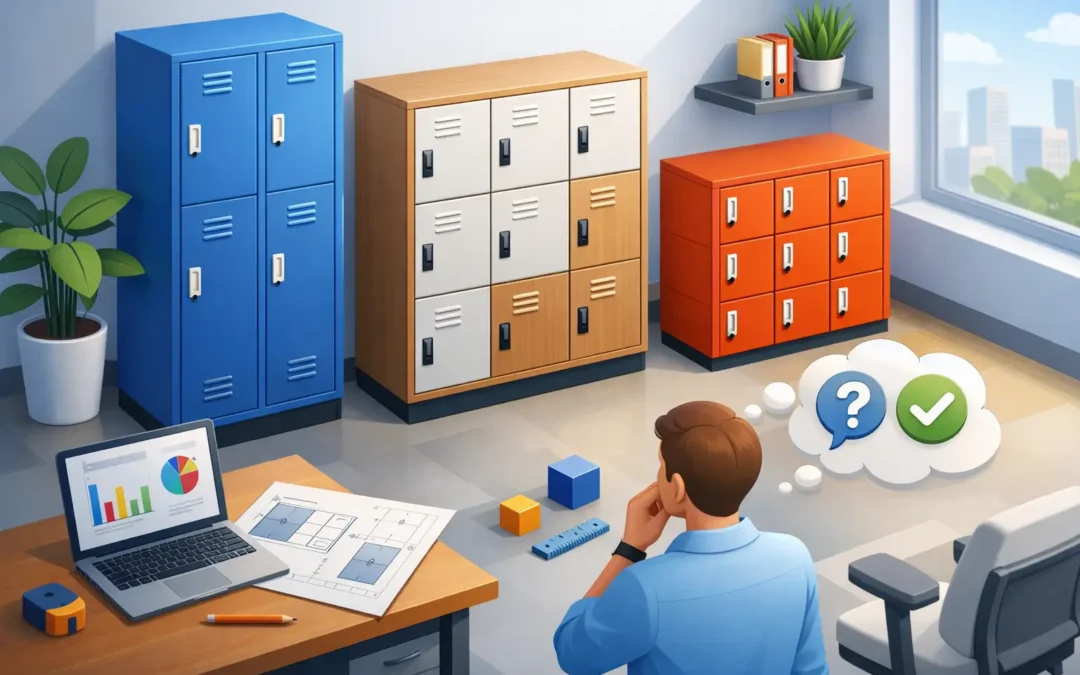
A locker that is too small becomes a daily irritation. A locker that is too large can consume valuable floor space that could have supported another workstation, training seat, or meeting area. To select office locker sizes well, start with what people actually need to store, then balance that need against the room, traffic flow, security requirements, and future headcount.
For offices, schools, training centers, and shared commercial spaces, lockers are not simply storage cabinets. They support a more organized workplace by giving people a dependable place for personal items, work bags, helmets, uniforms, documents, and devices. The right configuration makes the space feel considered. The wrong one creates clutter in corridors, bags under desks, and a layout that feels tighter than it should.
Start With the Items That Need Storage
The best locker size is determined by contents, not by a standard measurement alone. Before choosing a model, ask staff or facility users what they regularly bring into the space. A compact personal locker may be enough for a wallet, phone, small bag, and lunch. It will not be practical for a motorcycle helmet, backpack, laptop bag, safety shoes, or a change of clothes.
Small single-compartment lockers suit short-term storage and environments where users carry only light personal belongings. They are often a sensible choice for visitor areas, hot-desking zones, libraries, or training rooms. Medium compartments are more versatile for everyday office staff because they can accommodate a bag, documents, and personal items without taking up the footprint of a full-height wardrobe-style locker.
Tall lockers are appropriate when users need to hang garments, store uniforms, or keep larger bags off the floor. They are common in factories, schools, sports facilities, clinics, and workplaces where employees change before or after a shift. If helmets are a regular concern, measure actual helmet dimensions rather than assuming a standard compartment will fit. A few centimeters can make the difference between a useful locker and one that is constantly left open.
Select Office Locker Sizes Around Available Space
A good locker layout protects circulation first. Measure the wall length, ceiling height, door swing, windows, electrical points, fire equipment, and nearby workstations before selecting the number of compartments. Also account for the depth of the lockers and the room left in front of them when doors are open.
A bank of lockers may fit neatly against a wall on paper but still create congestion during arrival, lunch, or shift changes. This is especially relevant in narrow offices, staff pantries, school corridors, and training centers. Users need enough room to approach, open a door, retrieve belongings, and move away without blocking others.
Depth deserves close attention. Shallower lockers can work for documents, small personal effects, and light bags, while deeper units better suit backpacks, helmets, and bulkier items. Choosing deeper lockers only because they offer more storage can be wasteful in a compact office. In a limited area, a shallower multi-tier design may serve more people while preserving a comfortable aisle.
Height is another practical decision. Full-height lockers make efficient use of vertical space and can provide generous compartments, but the upper sections must remain easy to access. Multi-tier lockers increase the number of users per unit, yet each compartment becomes smaller. There is no universal winner. The right approach depends on the items stored and whether lockers are assigned to individuals or shared throughout the day.
Think in User Capacity, Not Just Locker Quantity
Ten locker units do not necessarily serve ten people. A unit with four doors can serve four users, while a tall single-door locker serves one. Calculate capacity based on compartments, then compare it with the number of expected users at peak time.
For assigned staff lockers, provide one compartment per person and allow a reasonable allowance for growth. If the team is expected to expand, adding a small number of spare compartments is usually more cost-effective than replacing an entire locker bank later. For visitor or hot-desk storage, capacity can be based on peak occupancy instead of total employee numbers.
Schools and training facilities need a slightly different calculation. Consider class size, session overlap, and whether bags must be stored during lessons. A training center with rotating groups may need more short-term compartments than a conventional office with permanent staff.
Match Compartment Layout to How People Work
Locker dimensions and door arrangement should reflect daily routines. In a conventional office, users may visit their locker only at the beginning and end of the day. A multi-tier layout can be space-efficient because there is less pressure for large, fast-access compartments. In contrast, staff working in a warehouse, laboratory, healthcare environment, or customer-facing role may need frequent access to uniforms, equipment, or personal protective items.
Consider whether users need a hanging rail, shelf, or open compartment. A tall locker without an internal hanging option may not meet the needs of staff storing jackets or uniforms. A small compartment without a shelf may become untidy if it holds documents and lunch containers together. Small functional details influence whether people continue using the lockers as intended.
It also helps to separate personal storage from operational storage. Staff belongings, cleaning supplies, files, IT accessories, and tools should not compete for the same locker space. If the objective is organized personal storage, select a locker designed for people. If the objective is secure equipment storage, the size, internal fittings, ventilation, and locking requirements may be different.
Do Not Overlook Doors, Locks, and Ventilation
Locker size is closely linked to door type and hardware. Full-length doors provide access to tall items, but they need more clear space in front. Smaller doors in multi-tier lockers can reduce the area affected by each opening and may work better in busy rooms. Where space is particularly tight, discuss the available layout before finalizing a configuration.
Lock selection should match who uses the locker and how often users change. Key locks can be straightforward for assigned lockers, though key management needs a clear process. Combination or digital locks may be convenient for temporary users, but they require battery, reset, or administration planning. The most advanced option is not always the most practical one for the site.
Ventilation matters for lockers used for shoes, uniforms, sports gear, or damp personal items. Vented doors and suitable materials help reduce odor buildup and make compartments more comfortable to use. For offices storing only bags and stationery, ventilation may be less critical, but it is still worth considering in humid locations or enclosed rooms.
Plan for Delivery and Installation Early
A locker can be the correct size for its final location and still be difficult to bring into the building. Check lift dimensions, stairwells, corridor widths, loading access, and any building management rules before ordering. This is particularly important for full-height units, heavy steel lockers, and installations on upper floors.
Installation planning should also include wall and floor conditions, leveling, and whether adjacent units need to be joined for stability. In public-facing, school, or high-traffic environments, professionally positioned and secured locker banks help maintain a safer, cleaner appearance. Labeling compartments during installation can save administrative time once users move in.
At Wawasan Office, practical planning can cover more than choosing a product from a catalog. A conversation about room dimensions, user needs, delivery access, and installation helps reduce avoidable changes after the lockers arrive.
A Simple Way to Make the Final Choice
Before approving a locker order, confirm four decisions: what each user will store, how many users need access at the busiest time, how much floor and aisle space the location can spare, and how the lockers will be delivered and installed. These answers usually make the suitable size range clear.
A well-chosen locker should disappear into the rhythm of the workplace. People should be able to store their belongings quickly, move through the space comfortably, and return to a cleaner desk or learning area. When storage supports those everyday moments, the whole workplace feels easier to manage.